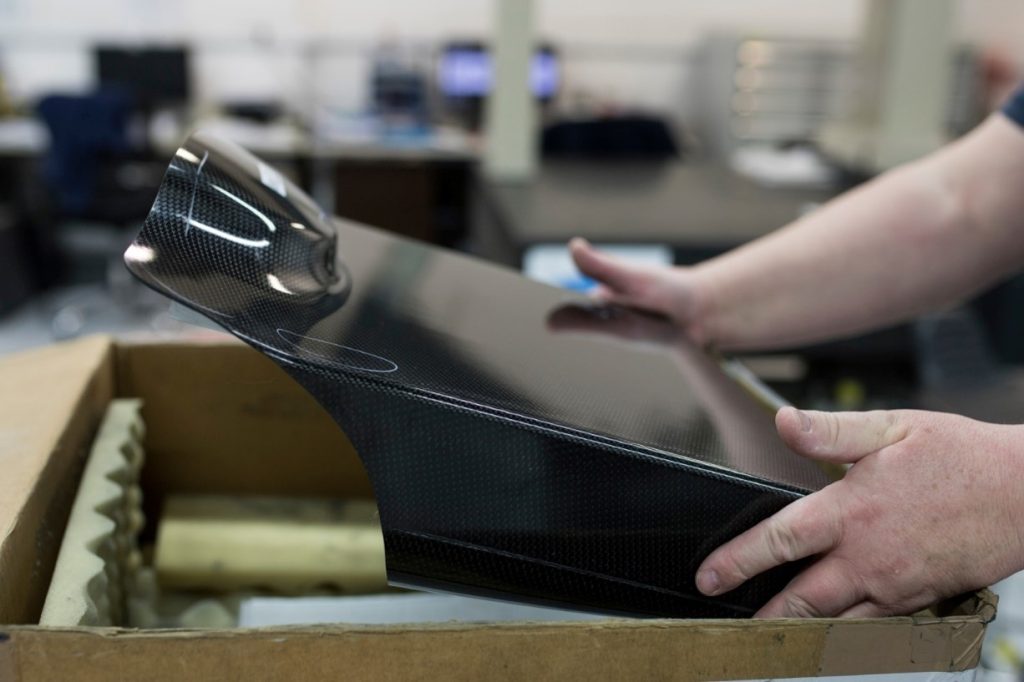

Medical device OEMs are under pressure from every direction. They need to improve product performance, shorten development timelines, simplify supply chains and deliver systems that work better for clinicians without driving up complexity for healthcare providers. In that environment, materials matter more than ever. And in imaging-intensive applications, composites, especially carbon fiber, are becoming a serious source of product differentiation.
We have identified this need and are well positioned to help OEMs act on that opportunity. With capabilities spanning research and development, product development, manufacturing, quality assurance and regulatory affairs, distribution and services, we offer OEMs a practical path to bring advanced material strategies into commercial-scale production.
The Market Is Moving in Favor of Medical Composites
The growth outlook for medical composites supports a clear strategic case for OEM investment. Public market estimates point to steady expansion in the category, while Motherson’s own referenced segment opportunity underscores the commercial relevance of radiology, imaging and adjacent medical applications. For OEM stakeholders, that means the shift toward composites is not only a technical trend but also a market-backed growth opportunity.
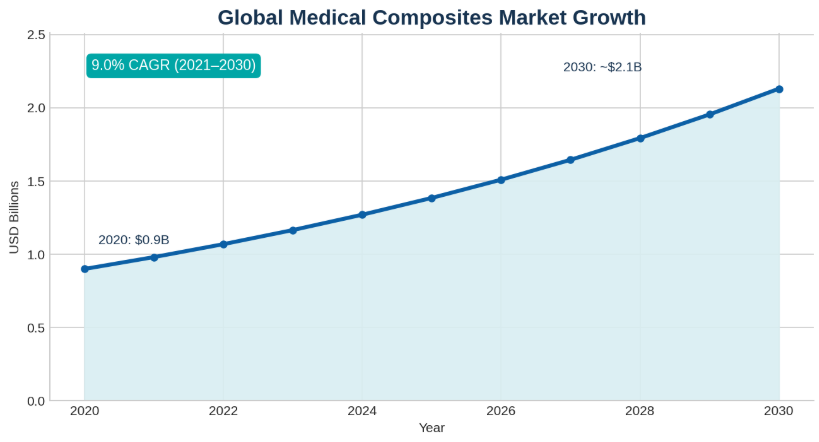
Illustrative market growth based on public medical composites market estimate: $0.9B in 2020 to ~$2.1B by 2030 at 9.0% CAGR.
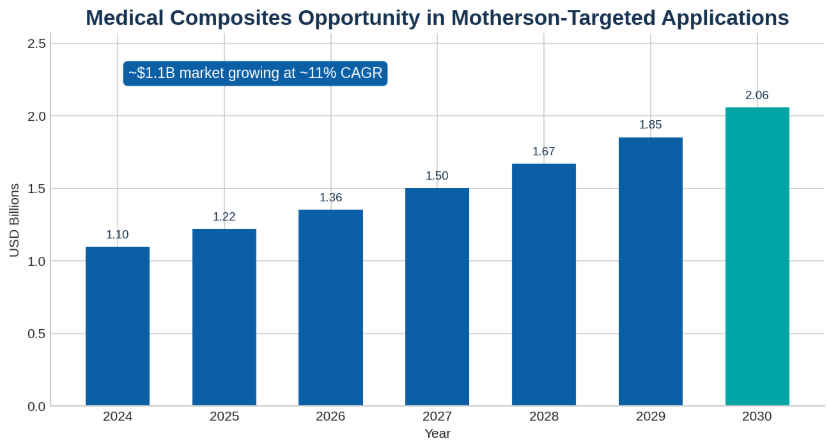
Illustrative opportunity curve based on Motherson-cited medical composites segment size of ~$1.1B growing at ~11% CAGR.
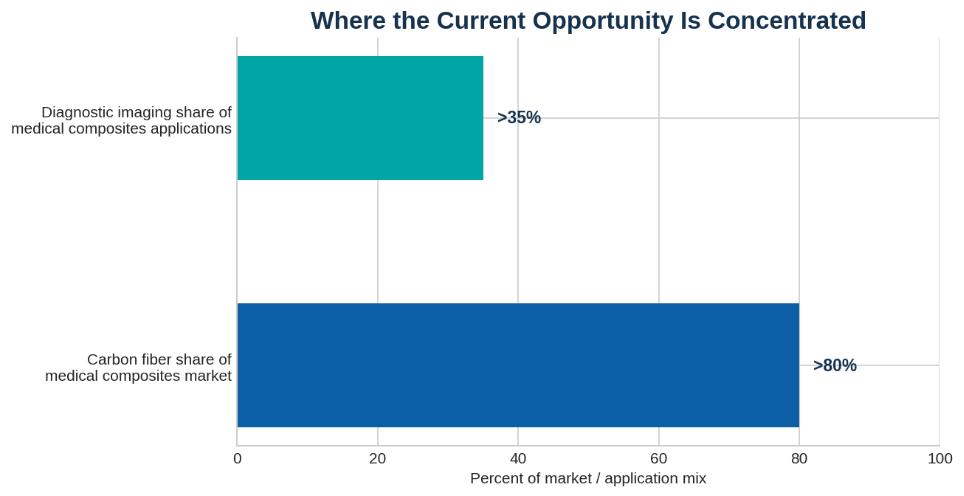
Opportunity mix snapshot: carbon fiber led the market and diagnostic imaging represented the largest application segment in the public estimate used for this draft.
Why Carbon Fiber Is Moving From Nice-to-Have to Must-Consider
Carbon fiber is gaining traction in medical sector because it solves multiple engineering challenges at once. In radiology and image-guided care, its standout advantage is radiolucency. Carbon-fiber-reinforced structures are highly transparent to X-rays, which helps reduce imaging shadows and interference compared with denser metallic materials.
The material also delivers a strong strength-to-weight ratio. Medical systems need structural integrity, but excessive weight can make equipment harder to maneuver, more difficult to service and less ergonomic for clinicians. Carbon fiber helps OEMs reduce mass without compromising stiffness, durability or fatigue resistance.
That combination has real clinical and commercial relevance. A lighter, imaging-compatible component can improve usability for providers while helping OEMs design more refined systems. In applications close to the imaging chain, carbon fiber supports clearer imaging and more efficient workflows, which is why adoption continues to expand across radiology, intervention and adjacent medical applications.
Why Motherson Health & Medical Is Well Placed to Help OEMs Capture That Value
The real opportunity is not simply using composites. It is industrializing them successfully. That is where Motherson’s positioning becomes especially compelling. The company brings together contract design and manufacturing capabilities with vertically integrated operations, medical quality systems and broad expertise across composites, metals, plastics, electronics and other critical manufacturing disciplines.
For OEMs, that matters because composite-rich medical products often stall when engineering, validation and manufacturing are fragmented across too many suppliers. Motherson’s end-to-end model helps reduce that risk. Instead of treating materials as an isolated decision, OEMs can align product design, manufacturability, quality and supply-chain planning earlier in the development cycle.
That B2B value proposition goes beyond engineering efficiency. OEMs are increasingly judged on how well their products fit into provider workflows. A better-designed detector housing, a lighter patient table or a more durable imaging accessory can create measurable value at the hospital level through easier handling, stronger ergonomics and cleaner imaging performance. Motherson’s mix of medtech focus and manufacturing breadth gives OEMs a partner that can connect material selection to business outcomes, not just component fabrication.
Four High-Value Application Areas Where Motherson Can Support OEM Growth
Detector Panels and X-Ray Detector Housings
One of the clearest opportunities lies in detector-panel structures and X-ray detector housings. These components need to balance low weight, dimensional stability and durability with imaging compatibility. Carbon fiber is well suited to that mix, helping OEMs reduce mass without sacrificing structural performance.
For providers, that can mean easier handling and improved usability in fast-moving imaging environments. For OEMs, it creates an opportunity to improve portability, reliability and product differentiation in categories where performance expectations continue to rise.
Radiology Beds and Patient Tables for X-Ray Systems
Patient tables and radiology beds are another strong fit for composite engineering. These structures sit directly within the imaging workflow, so the support surface must remain rigid while minimizing interference with the imaging chain.
Carbon fiber allows OEMs to design tables that are both sturdy and radiolucent. That can improve image acquisition while also supporting patient access, positioning accuracy and workflow efficiency. For healthcare providers, the result is equipment that is easier to operate and better aligned with the realities of high-volume diagnostic care.
Patient Tables for Interventional Guided Therapy Systems
Interventional guided therapy systems place even greater demands on structural components. In these settings, the table is central to both imaging visibility and procedural access.
Composite table structures can help OEMs balance stiffness, low attenuation and ergonomic form factors in a way that supports advanced procedures. For providers, that can translate into smoother workflows, better access around the patient and equipment that is more compatible with image-guided care pathways.
CT Scanner Patient Tables and Mammography Systems
CT scanner patient tables and mammography systems are also strong examples of where composites can contribute to both performance and product differentiation. In CT, repeatable positioning and structural integrity are essential. In mammography, system precision and patient-centered design are key to the user experience.
Composites allow OEMs to pursue lighter, durable, high-performance structures that support both platform consistency and system-level innovation. For providers, that can translate into equipment that is easier to operate, better optimized for throughput and more aligned with the expectations of modern diagnostic care.
Two Additional Use Cases That Expand the Opportunity
Prosthetics and Orthotics
Carbon fiber composites are also increasingly relevant in prosthetics and orthotics. Their low weight and high stability make them attractive for products where patient comfort, energy return and long-term durability all matter. For OEMs, this opens a path to differentiated mobility solutions that can combine performance with repeatable manufacturing.
Stretchers and Patient Transfer Systems
Stretchers and transfer systems represent another practical expansion area. The lightweight nature of carbon fiber can improve speed, maneuverability and ease of handling in urgent care environments, while maintaining the strength required for daily clinical use. For providers, that translates into equipment that is easier to move and better suited to high-demand workflows.
The Bigger Business Case: Better Systems for OEMs, Better Workflows for Providers
The strongest case for carbon fiber in medical is not about the material in isolation. It is about what the material enables. For OEMs, composites can support lighter assemblies, better imaging compatibility, more refined industrial design and stronger product differentiation in competitive categories.
For healthcare providers, those same material decisions can improve staff ergonomics, system usability and workflow efficiency in high-volume environments. That is why partner selection matters. It is one thing to source a composite component. It is another to develop a medical product with the quality systems, cross-functional engineering and production readiness required for long-term success.
To Summarize
Medical composites are no longer just an engineering conversation, they are a growth conversation. Carbon fiber offers a valuable mix of radiolucency, lightweight performance, stiffness and durability that fits naturally into radiology, intervention and adjacent imaging applications.
Motherson Health & Medical brings value because it pairs those material possibilities with the operational capabilities OEMs actually need: end-to-end development support, vertically integrated manufacturing, global scale and experience across the medical product lifecycle. In short, it gives OEMs a way to turn composites from a promising design idea into a scalable business advantage, and that ultimately benefits healthcare providers too.
Note: Market visuals are directional and based on public market estimates and Motherson-announced segment data.